Battery Storage Systems for a Reliable Energy Supply
We develop, build, and manage according to your needs.
One location - four possibilities
Standalone, co-location, gray electricity, or green electricity storage: There are several options for implementing storage projects. We’ll explain them.
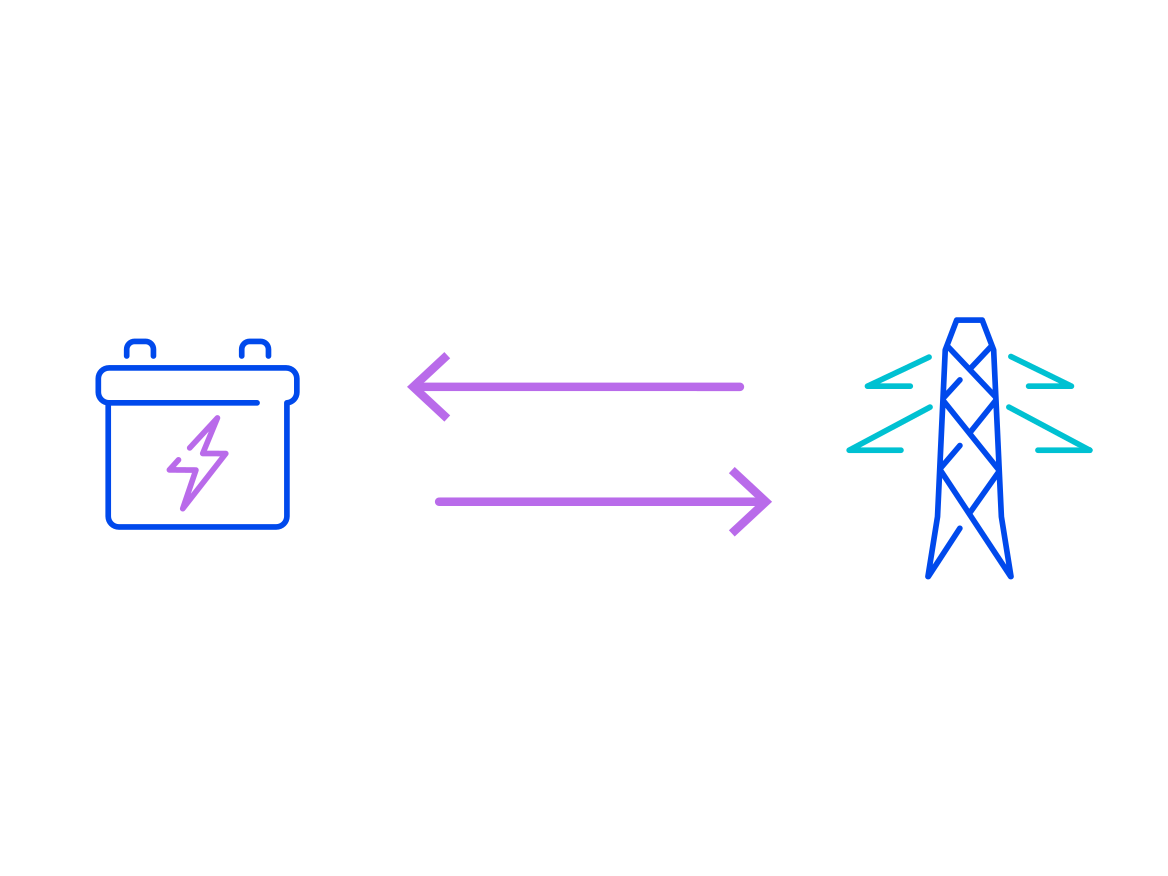
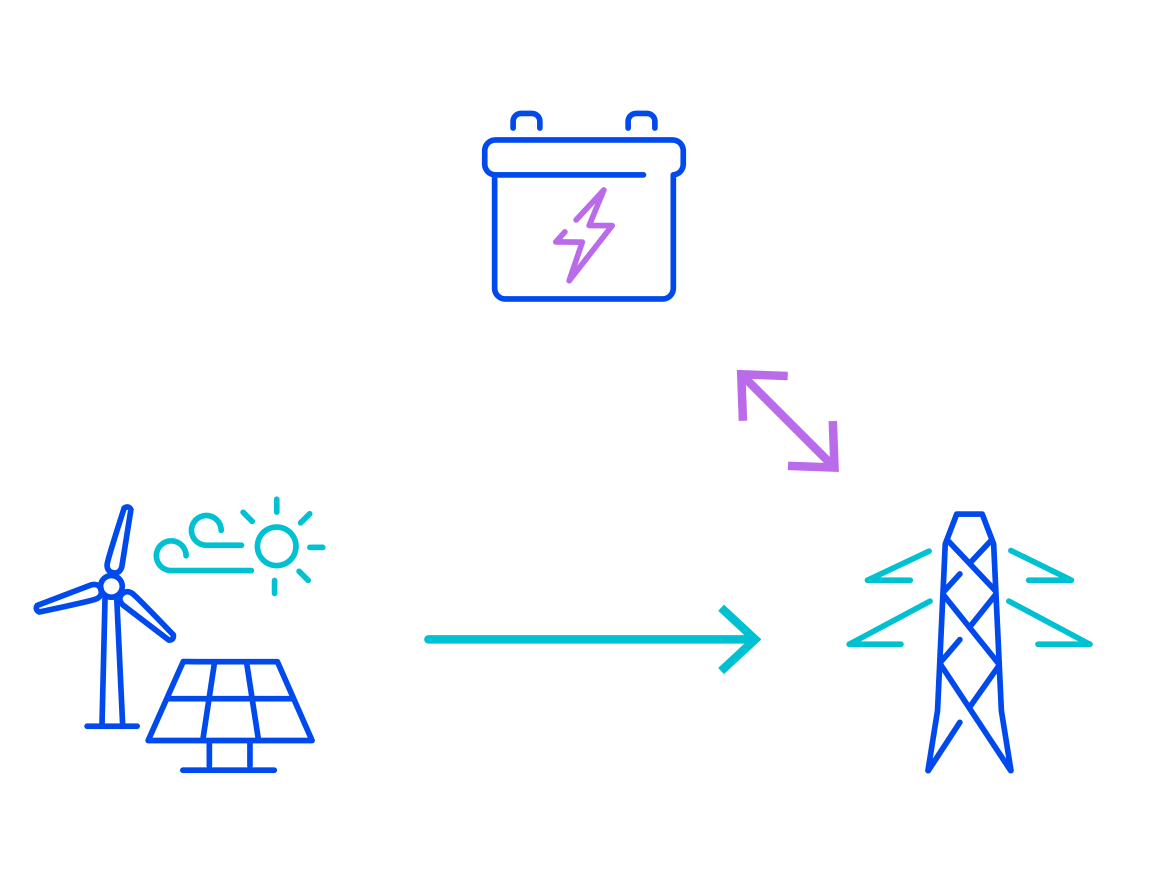
Stand alone
A stand-alone battery storage system is connected directly to the power grid and operates independently of wind or solar power generation. This type of system always stores “gray electricity,” since the stored electricity corresponds to the current mix of power from the grid.
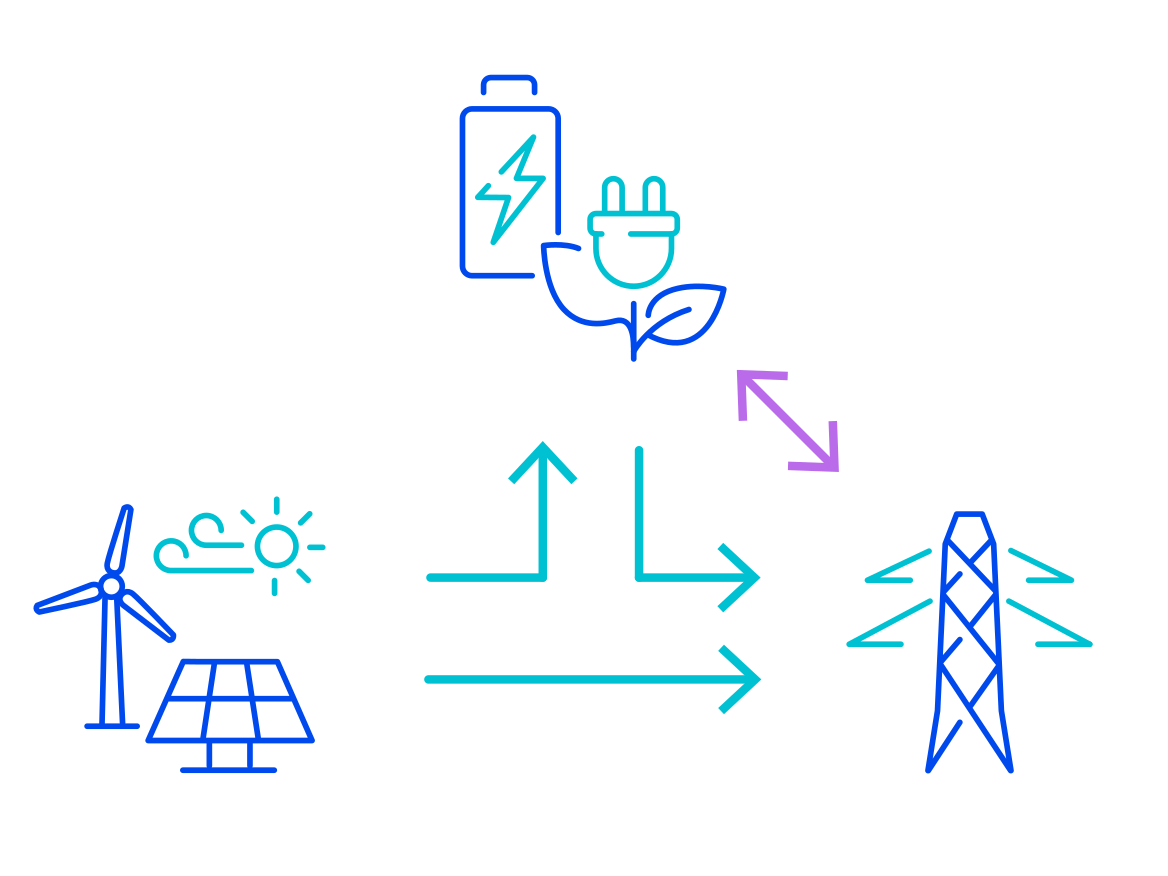
Co-location – not built over
The rated capacity at the substation corresponds to the total connection capacity of the renewable energy plants and the BESS; each technology can operate independently without the risk of curtailment. The storage system can be charged both from the grid and from the renewable energy plants (gray). However, this does not result in efficient use of the grid connection.
Co-location – built over
The total connection capacity of the renewable energy systems and the BESS intentionally exceeds the committed capacity at the substation, which allows for more efficient use of the connection. Subject to certain restrictions, the storage system can also be supplied from the upstream grid (gray).
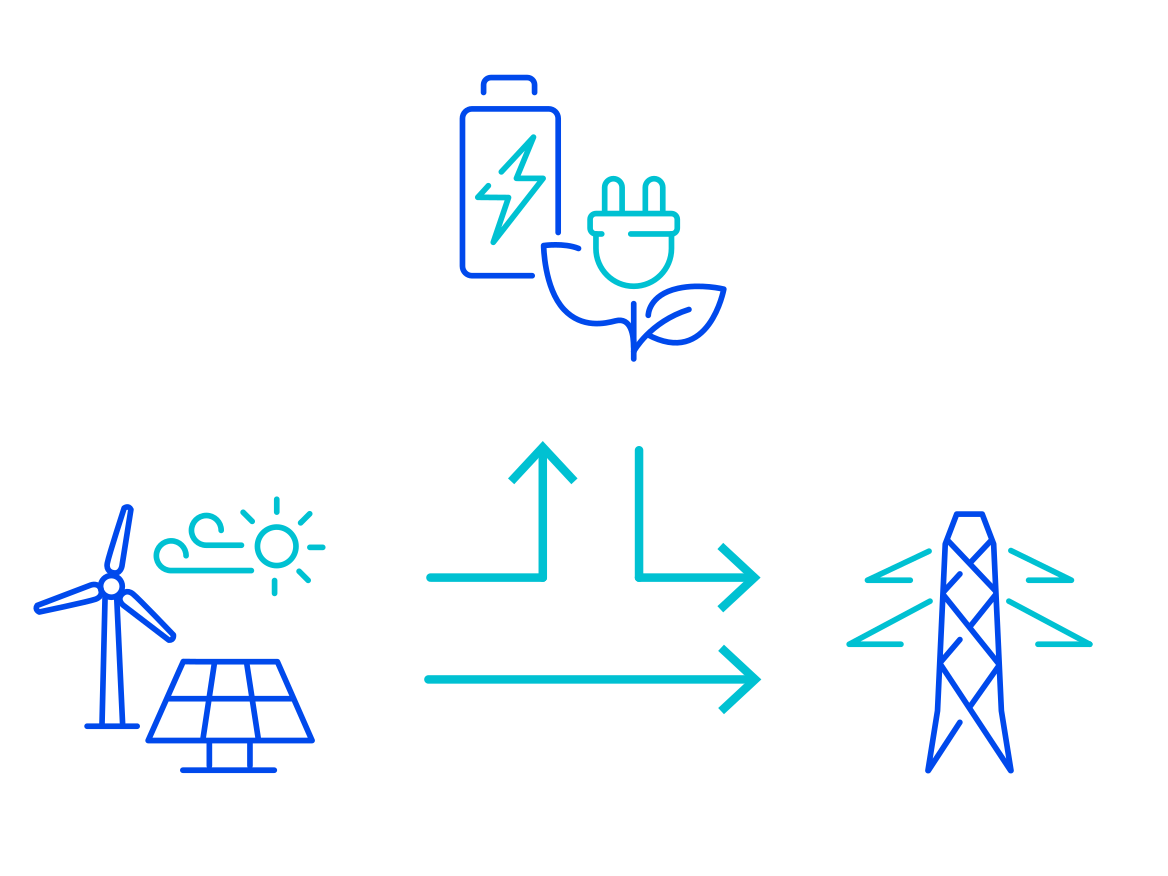
Co-location with Green Electricity
If the storage system stores only electricity from connected PV or solar farms, it is referred to as a green energy storage system. It is charged exclusively with renewable energy, stores it temporarily, and feeds it into the power grid as needed. Excess electricity from the grid is not accepted.
1
von
4
Stand alone
Co-location – not built over
Co-location – built over
Co-location with Green Electricity
Any Questions?
We look forward to speaking with you!
Meet the colleagues from JUWI and MVV Trading at our exhibition stand and learn more about our offerings, route-to-market models and joint solutions.